

The human brain is generally treated like a fragile, sealed vault. The prevailing wisdom is that you do not rattle the vault. You do not shake it. But strapping a cheap, low-risk ultrasound wand to your head might sound a bit fringe, and yet it is increasingly looking like a remarkably practical way to keep your cognitive function intact.
When things go wrong in the brain—whether from a traumatic injury, a stroke, or just decades of accumulated metabolic waste—the resulting debris gets trapped. Dead cells and stray proteins clog the cerebrospinal fluid. The local immune system panics, causing secondary damage that is often worse than the initial injury. We have spent billions trying to design drugs to chemically dissolve this trash, mostly without success. It turns out the solution might not be chemical at all. It might just be mechanical.
“Ultrasound-treated mice exhibited lower brain edema, recovered their body weight faster, and had significantly increased survival rates compared to sham-treated controls.”
What’s the Big Idea?
I’ve actually been running my own rogue experiments with this concept. Most nights before bed, I hold a basic US 1000 ultrasound device to my head. I originally stumbled onto this via a guy named Sterling Cooley, who was looking at ultrasound for mitochondrial health in the heart. But the brain applications kept proving too fascinating to ignore. A year of nightly use later, I’m seeing stubborn, ongoing cognitive benefits.
Now, a team of Stanford researchers just dropped a paper showing exactly the mechanics of why beaming soundwaves into the brain works.
They looked at hemorrhagic stroke, which essentially floods the brain with stray red blood cells. The aftermath is highly toxic. The researchers hit the skulls of mice with low-intensity, 250 kHz focused ultrasound. The acoustic pressure physically forced the cerebrospinal fluid to mix with the deeper environment of the brain’s interstitium, flushing the neurotoxic garbage out through the meningeal lymphatic system and into the lymph nodes in the neck.
Through detailed histology and immunofluorescence—using brightly colored AlexaFluor tags in their immunostaining to track the cellular action under a microscope—the researchers watched the soundwaves manually speed up the brain’s Glymphatic clearance network.
The vibration did more than just slosh fluids around. The mechanical force directly triggered mechanosensitive ion channels, specifically one called Piezo1. This physical trigger forced the brain’s resident immune cells, known as microglia, to snap out of a hyperactive, neuroinflammatory state. Instead, they reverted to a calm, homeostatic cleanup mode where they physically swallowed the dead red blood cells. When the team sequenced the brain tissue afterward, they found that damage-inducing inflammatory genes were shut down, while the exact pathways needed for tissue repair were cleanly upregulated.
💡 In Plain English
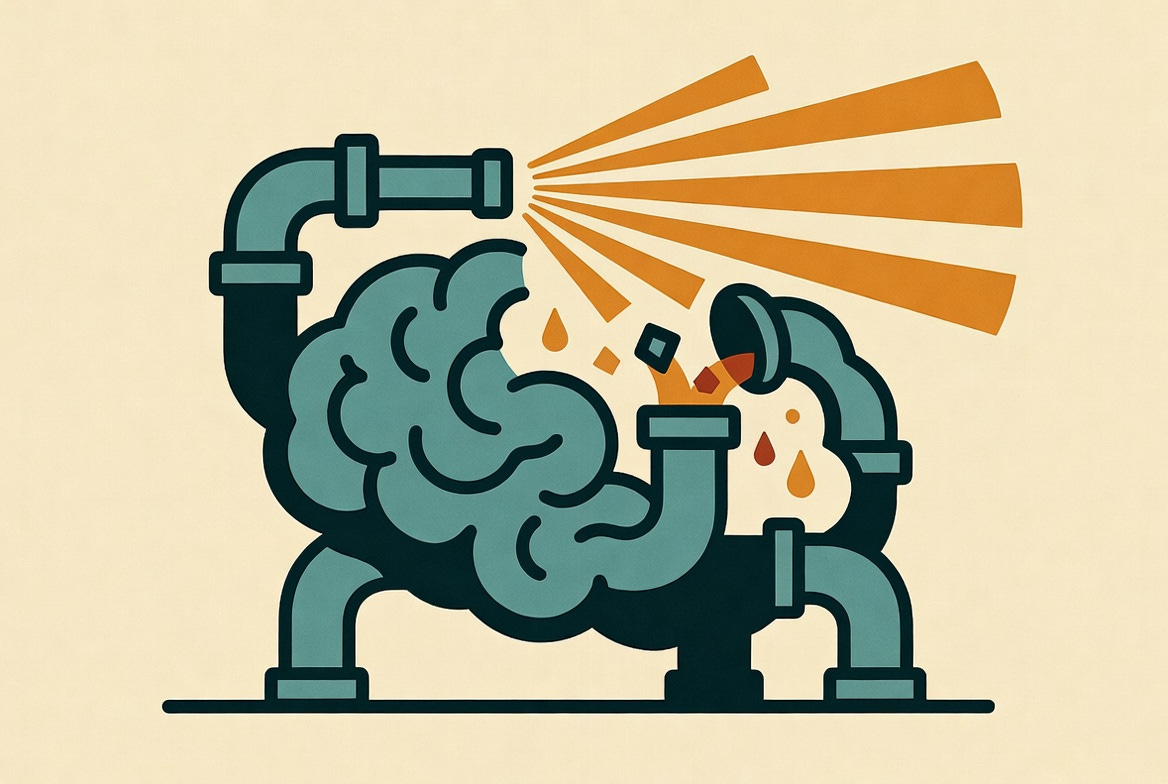
Targeted ultrasound clears a clogged brain the same way a gentle, physical plunger clears a stubborn pipe: by relying on mechanical pressure rather than corrosive chemical solvents. While a highly advanced experimental drug designed to chemically dissolve this cellular trash turned into a fatal disaster, simply vibrating the tissue safely nudged the brain’s immune cells into a life-saving cleanup mode.
Why It Matters and What You Can Do
Getting trash out of the central nervous system without destroying the surrounding tissue is one of the hardest problems in medicine. During this study, researchers compared their ultrasound method to a benchmark pharmacologic agent called Yoda-1, which is designed to chemically activate those exact same Piezo1 clearance channels. The drug was an unmitigated disaster and killed most of the mice.
Meanwhile, the mice that received the ultrasound vibrations survived at an 83% rate. They had drastically smaller hematomas, significantly less brain swelling, and rapidly regained their grip strength and motor control.
Even if you haven’t suffered a stroke, your brain builds up metabolic waste every single day.
Experimenting with hardware: Basic transcutaneous continuous ultrasound devices (like the US 1000) are cheap and accessible. They are designed for joint and muscle pain, but the underlying mechanical delivery of acoustic waves overlaps with this science. It is an incredibly low-risk tool to have in a home health kit.
Support the secondary plumbing: The ultrasound forces the debris out of the brain matrix, but it still has to drain. Keeping the physical exit routes clear—moving fluids through leptomeningeal channels and draining them out via the arachnoid villi and dural sinuses—requires deep, highly structured sleep. Acoustic stimulation won’t save you if your sleep architecture is wrecked.
Stacking mechanical forces: Because ultrasound works by mechanically mixing fluids at the cellular level, pairing it with cardiovascular exercise—which independently drives bulk blood and fluid flow—can compound the waste-clearing effect.
What’s Next on the Horizon?
Translating a neurological cure from a mouse to a human is notoriously difficult, primarily because our skulls are thick and our brains are massive. Fortunately, the 250 kHz acoustic frequency used in this protocol easily penetrates the human skull without dangerous tissue aberration.
Researchers still need to map the exact limits of these mechanosensitive receptors. To prove the soundwaves were working via mechanical triggers, the team injected the mice with GsMTx4, a peptide derived from tarantula venom that rigidly blocks mechanosensitive ion channels. The moment the channels were blocked, the ultrasound completely stopped working. The fluid mixed, but the brain’s immune cells didn’t initiate the cleanup. The next phase of clinical trials will need to isolate exactly how much acoustic pressure is required to trigger these cellular antennas in human patients.
If this efficacy holds up, the treatment landscape for cognitive decline alters dramatically. Instead of injecting invasive, highly toxic experimental drugs to clear amyloid plaques or post-concussion proteins, doctors could simply use targeted soundwaves to manually switch on your brain’s built-in garbage disposal.
Safety, Ethics, and Caveats
Firing acoustic energy into the gray matter carries inherent risks, primarily from heat accumulation. The researchers deliberately pulsed the ultrasound—leaving it on for 50 milliseconds and off for 150 milliseconds—to ensure the tissue didn’t overheat. They ran a strict power analysis beforehand to ensure their exposure limits were safe, and tracked intracranial temperatures to confirm the brain actually cooled slightly during the procedure due to the coupling gel.
The statistical rigor here is tight. Because animal cohorts are small, they calculated true effect sizes using Hedges’ g to prevent skewed data, and validated their findings using robust non-parametric models like the Kruskal–Wallis and Mann–Whitney U-tests.
Still, a mouse skull is not a human skull. Scaling this up requires exact calibration. Applying the wrong frequency or too high a pressure could cause cavitation—essentially creating microscopic bubbles that burst and shred brain tissue. If you are taking the DIY route with a commercial wand, moderation is everything. You are physically manipulating the pressure of the fluid inside your skull. Push too hard, and you risk triggering the exact neuroinflammation you are trying to resolve.
One last thing
It is strangely comforting to realize the brain isn’t just a mysterious, untouchable black box of chemistry. It is also a very physical, mechanical organ with actual pipes, pumps, and drains. Sometimes, when a physical pipe gets clogged, you don’t need a complex chemical solvent. You just need to give the plumbing a good, strong shake.