

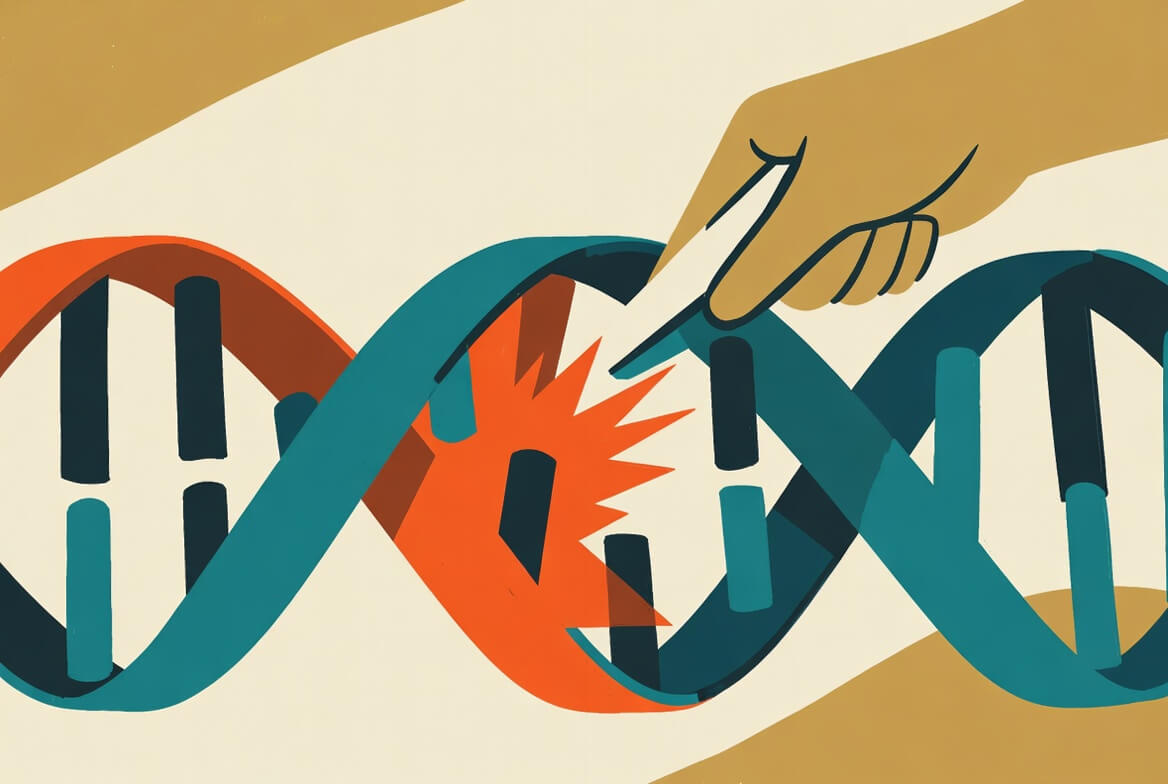
I recently went down a rabbit hole writing a deep dive on Bromantane, throwing around phrases like “gene expression” and “upregulation” with the confidence of a tenured professor. A friend of mine read it, texted me, and rightly checked me: “Bro, you said it stimulates the gene directly. What does that even mean?”
He was right. We throw around these biohacking buzzwords until they lose their shape. But in this case, the mechanics are actually wilder than the buzzwords suggest.
Most stimulants are brute-force tools. They kick down the front door of your dopamine receptors, flood the house with noise, and leave you with a broken lock and a hangover. Bromantane is different. It doesn’t kick the door in; it picks the lock involving your DNA.
Based on the research, my stance has shifted from “this is a cool supplement” to something heavier: Bromantane is a pair of molecular pliers that cracks open your genetic code to let the dopamine flow.
“Ladasten (Bromantane) was shown to increase frequency of cytosine demethylation in binding sites of some transcription factors... resulting in more than a twofold increase in the mRNA level of the tyrosine hydroxylase gene in the rat brain hypothalamus.”
What’s the Big Idea?
To understand what this Russian study actually found, you have to understand how your body decides to make energy.
Your brain produces dopamine using an enzyme called Tyrosine Hydroxylase (TH). Think of TH as the factory floor manager. If you have a lot of TH, you can churn out dopamine efficiently. If you don’t, you’re sluggish, unmotivated, and tired.
Usually, your DNA has “instructions” for making TH, but those instructions are often physically covered up. In biology, we call this methylation. A methyl group is like a piece of duct tape stuck over a sentence in an instruction manual. If the DNA is methylated (”taped over”), the cell can’t read the instructions, so it doesn’t make the enzyme, and you don’t get the dopamine.
The researchers in this study took rats and gave them a single dose of Ladasten (Bromantane). Then they looked at the hypothalamus—the brain’s control center—1.5 hours later.
Here is the crazy part: The Bromantane physically scrubbed the tape off the DNA.
Technically, it caused “demethylation” of the CpG islands in the promoter region of the Tyrosine Hydroxylase gene. By removing those methyl groups, it exposed the binding sites for transcription factors (like CREB and AP2). Once those sites were exposed, the cell could read the unexpected instruction: Hire more managers.
The result? A massive spike in TH mRNA expression. The brain wasn’t just dumping existing dopamine; it was building the infrastructure to create more of it from scratch.
💡 In Plain English
Think of your DNA as an instruction manual with certain pages glued shut—specifically the pages that tell your body how to create energy. Bromantane acts like a solvent that dissolves that glue, allowing your cells to finally read the instructions and build the machinery necessary to produce its own dopamine, rather than just burning through what you already have.
Why It Matters and What You Can Do
This distinction—modifying the machinery vs. burning the fuel—explains why Bromantane feels so different from Adderall or caffeine. It falls into a category called “Actoprotectors.” It’s not borrowing energy from tomorrow; it’s optimizing the engine for today.
Here is the practical upshot of the epigenetic mechanism:
The “Memory” Effect: Because this involves physically changing the methylation status of a gene, the effects can outlast the drug’s half-life. The “tape” doesn’t just fly back onto the DNA the second the drug leaves your system. This aligns with anecdotes of users feeling better for days or weeks after a cycle.
Sustainability: Typical stimulants cause downregulation (your brain gets deaf to the signal). This mechanism suggests upregulation (your brain getting better at the signal). You aren’t frying the receptor; you are empowering the producer.
The Stack Strategy: Since Bromantane increases the enzyme (TH) that converts Tyrosine into L-Dopa, and then Dopamine, you need the raw materials.
Fuel the Fire: If you are using Bromantane, ensure you have adequate intake of L-Tyrosine (dietary or supplemental). You just hired a bunch of new factory workers (TH); make sure you give them raw steel (Tyrosine) to build with.
Timing: The study showed gene expression spiked around 1.5 to 2 hours. This isn’t an instant hit. Plan your deep work blocks accordingly.
What’s Next on the Horizon
This study is from 2006, yet it feels futuristic. We are moving away from the era of “dumb” drugs that just agonizingly hammer a receptor until it breaks. We are moving toward epigenetic therapy.
If we can identify drugs that selectively “demethylate” specific genes—cleaning up the grime that accumulates on our software as we age—we aren’t just treating symptoms. We are restoring function.
I’m hoping this renewed interest on X.com and the biohacking sphere pushes funding into why Bromantane targets these specific gene sequences. If we can isolate that mechanism, we might see a new class of non-stimulant performance enhancers that work by “reminding” your body how it functioned when it was younger and more energetic.
Safety, Ethics, and Caveats
Before you go ordering white powder from a gray-market website, pump the brakes. There is a catch.
Epigenetics is a double-edged sword. This study shows Bromantane demethylates the Tyrosine Hydroxylase gene, which is great for dopamine. But we don’t know what else it might be demethylating.
The Shotgun Risk: “Global hypomethylation” (removing methyl groups everywhere) is generally bad. It’s associated with genomic instability and even cancer (tumors love to un-silence genes that shouldn’t be active). While the study claims Bromantane is somewhat selective to these transcription factors, we don’t have a full map of the human genome under the influence of this drug.
The Dose: The rats were given 50mg/kg. For a human, that is a massive dose. Standard human dosing is much lower (usually 50-100mg total), so the effects might be subtler, but so are the risks.
One-Way Street: Modulating gene expression isn’t something to take lightly. You are tinkering with the operating system, not just the apps. Proceed with caution, cycle off, and treat it with respect.
One Last Thing
We tend to look at biology as hardware—organs, neurons, bone. Bromantane reminds us that we are also software. Sometimes you don’t need new hardware; you just need to clean up the code.
Explore the Full Study
Cytosine Demethylation in the Tyrosine Hydroxylase Gene Promoter in Hypothalamus Cells of Rat Brain under the Action of 2-Aminoadamantane Compound Ladasten
Russian Journal of Genetics, 2006