

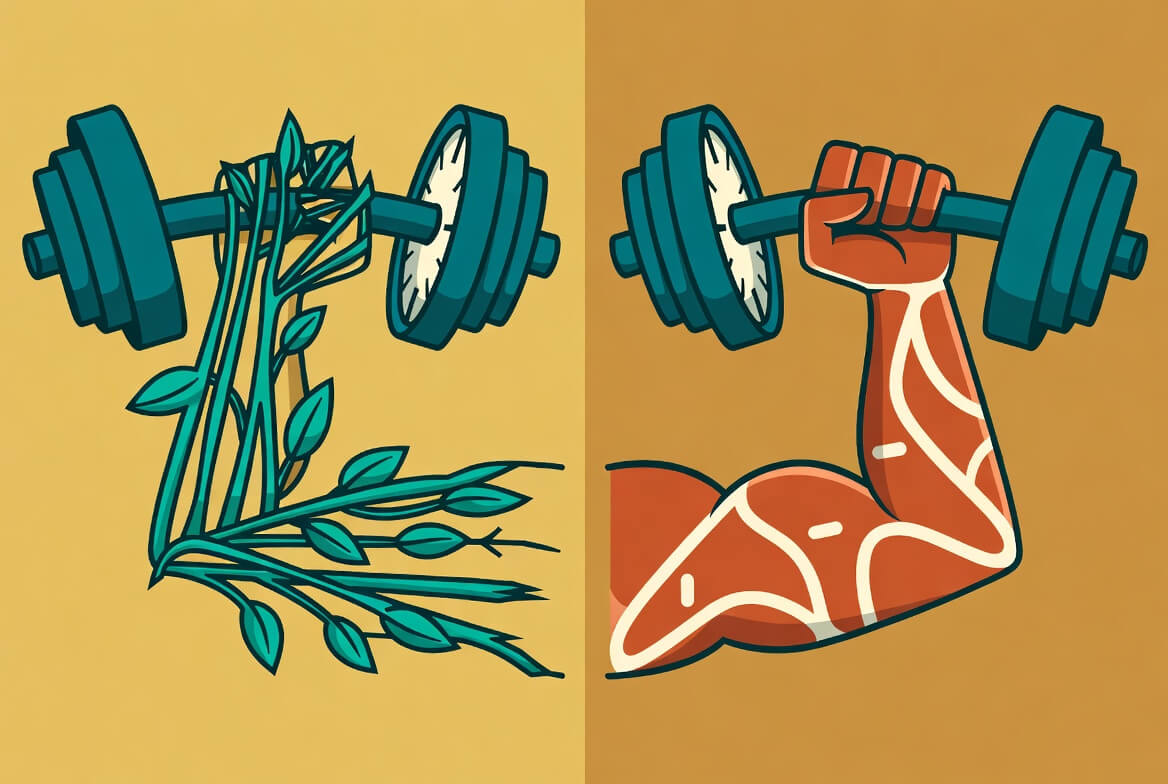
We have somehow convinced ourselves that the path to immortality is paved with kale, restriction, and moral superiority. Whether it’s Blue Zone mythology or tech billionaires strictly monitoring their caloric intake, the cultural narrative is loud: Plant-based is the only way to age gracefully. If you want to live forever, put down the burger.
But biology has a nasty habit of complicating our best-laid narratives.
A fascinating new paper out of China just dropped a bomb on the “meat kills” dogma, specifically concerning the oldest members of our population. The study looked at thousands of people over the age of 80 to see who actually survived to become a centenarian. The results? The vegetarians didn’t win. In fact, they were significantly less likely to blow out 100 candles than the omnivores.
The takeaway isn’t that vegetables are bad—nobody is suggesting you stop eating broccoli. But the data suggests that relying solely on plants inevitably leaves a nutritional gap that becomes dangerous as you age. You still need to eat your veggies, but if you want to survive the long game, you absolutely cannot ghost animal protein.
Compared to omnivores, vegetarians over age 80 were 19% less likely to survive to 100. For strict vegans, the outlook was even bleaker—they had a 29% lower likelihood of becoming centenarians.
What’s the Big Idea?
Let’s look at the actual data rather than the vibes. Researchers from the Chinese Center for Disease Control and Prevention and Peking University utilized the Chinese Longitudinal Healthy Longevity Survey (CLHLS). This isn’t a small questionnaire; it’s a massive, nationally representative cohort. They took over 5,000 participants who were already at least 80 years old and tracked them until 2018 to see who hit the centenarian milestone and who didn’t.
The logic of modern longevity gurus—like Bryan Johnson, who is currently spending millions to reverse his biological age via a vegan-heavy protocol—is that maximizing lifespan requires minimizing the “damage” of digestion and inflammation. Theoretically, plants do this best.
However, this study exposes the flaw in that logic: Frailty.
The researchers found that the inverse association between vegetarianism and longevity was most brutal among those who were underweight (BMI <18.5). When you are 30, being lean is a flex. When you are 85, being lean is a liability. The study indicates that the vegetarians were missing the caloric density and complete protein profiles required to maintain muscle mass and skeletal integrity in deep old age.
To be blunt, the “soyboy” aesthetic—low muscle mass, low testosterone signaling, low structural density—doesn’t pay dividends when you’re fighting off pneumonia or a hip fracture at age 92. The vegetarians in the study were more likely to be malnourished. While the meat-eaters had the fuel to keep their engines running, the plant-only group simply ran out of gas.
💡 In Plain English
Think of aging like maintaining a vintage car. In your 40s, you worry about "gunk" clogging the engine, so you run on clean, light fuel (plants); but by 80, the car’s biggest risk is simply trusting out and falling apart. Animal protein provides the heavy structural steel needed to keep the chassis from crumbling, ensuring the vehicle actually holds together long enough to cross the finish line.
Why It Matters and What You Can Do
This creates a paradox for the health-conscious. We are told meat causes cancer and heart disease, yet this data suggests cutting it out eventually kills you. The solution lies in realizing that your biology is not static. What works for you at 40 might kill you at 90.
Here is how you handle your plate based on this new reality:
Respect the Anabolic Resistance: As you age, your body gets worse at turning protein into muscle (a condition called anabolic resistance). You need more high-quality protein just to maintain the same amount of tissue. Meat provides bioavailable amino acids that plant sources struggle to match without massive caloric overhead.
Don’t Fear the Steak (But Pick the Good Stuff): The moral of the story isn’t to hit the drive-thru. As always, the quality of the meat you consume is paramount. You are what your food eats. Grass-fed beef and pastured poultry offer a nutrient profile that processed feedlot meat can’t touch. We want the longevity benefits of meat without the inflammation of industrial farming.
Watch the Scale (In Reverse): If you are approaching your senior years, stop trying to diet down to a high-school weight. This study showed that the survival penalty for vegetarians practically vanished if they had a higher BMI. Having some “padding”—and specifically skeletal muscle—is your insurance policy against death.
What’s Next on the Horizon
Hopefully, this data pushes the conversation toward a middle ground. The vegan/vegetarian lifestyle has never really squared with the biological reality of human evolution—we are omnivores designed to extract nutrients from a variety of sources.
The future of longevity isn’t about removing food groups; it’s about optimizing them. We are already seeing a shift where “humane meat” isn’t just a marketing buzzword but a technological goal. Whether it’s through regenerative agriculture that sequesters carbon or ethical farming practices that treat animals with dignity, we are moving toward a world where we can fuel our bodies without the guilt.
We need to make meat production more humane, not obsolete. The data suggests our lives literally depend on it.
Safety, Ethics, and Caveats
Before you celebrate this news with a massive T-bone, let’s look at where the data gets messy.
First, this is a study of Chinese nationals. Their version of a “vegetarian” diet is culturally distinct from a Western one (think rice and pickled vegetables versus Impossible Burgers and avocado toast). They may have had lower protein intake than a well-supplemented Western vegan.
Second, the “meat advantage” disappeared in the study for people who were normal weight or overweight. If you are already carrying an extra 50 pounds, the protective mechanism of meat (preventing frailty) is less relevant to you than the risk of metabolic disease. This advice is specifically potent for the aging, shrinking population.
Finally, correlation isn’t causation. The researchers tried to adjust for smoking, drinking, and education, but life is messy. It’s possible the meat-eaters were just wealthier (meat is expensive) and therefore had better general healthcare, though the study tried to control for economic factors.
One Last Thing
You don’t get extra points at the pearly gates for having the cleanest arteries in the cemetery. Eat the steak, keep your muscle, and aim for 100.