

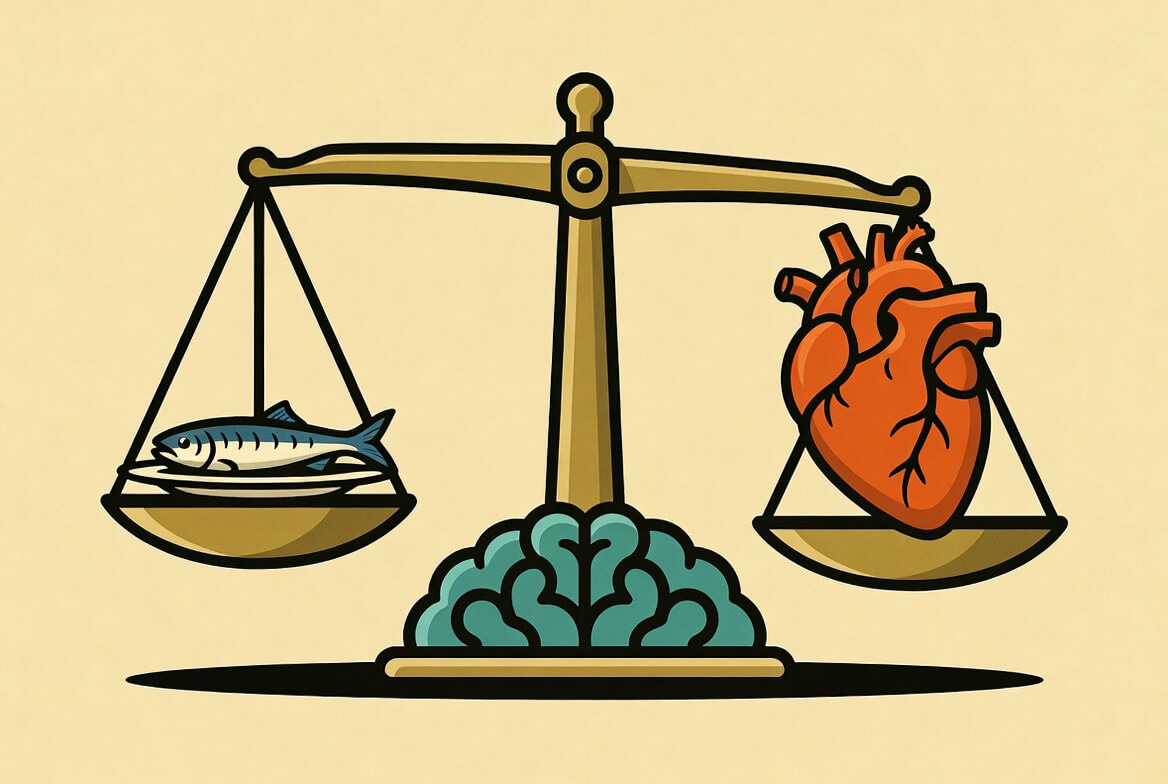
I’ve been doing this weird quarterly ritual for a while now. It’s a “sardine fast,” something I picked up from a Tim Ferriss interview years ago. The protocol is simple, miserable, and profound: for three days, I eat nothing but a single can of sardines in spring water per day.
I didn’t start doing it for the gastronomy. I did it for the reset. But something strange happened around the edges of the misery. I noticed my libido going through the roof. It wasn’t subtle. I started digging around, trying to figure out if this was a side effect of ketosis, the fasting itself, or just the body screaming to procreate before it starved to death.
Turns out, my tin-can experiment wasn’t a fluke. A massive new study out of Cell Metabolism just dropped, and it essentially validates the quarterly starve. If you think fasting is just for weight loss or longevity, you’re missing the fun part. It turns out that putting down the fork every once in a while acts like a hard system reboot for your sex drive—and the mechanism is completely different from what you’d expect.
The fasting mice didn’t have better sperm or higher testosterone. Their bodies were still old. But their brains were convinced they were teenagers.
The Brain Chemistry of “Not Tonight, Honey”
We usually assume that as we age, our sex drive tanks because our machinery gets rusty. You know the drill: testosterone drops, sperm quality dips, and the testes shrink. We treat fertility and libido as a hardware problem.
But this new research suggests the problem is actually software.
The researchers looked at aging male mice—who, much like aging men, usually lose interest in mating. They put a cohort of these mice on an Intermittent Fasting (IF) regimen. The results were startling. The old, fasted mice started mating with the enthusiasm of animals half their age. Their reproductive success rate skyrocketed from a dismal 38% (in the well-fed old guys) to 83%.
Here is the kicker: The fasting didn’t fix their hardware.
The fasted mice still had shrunken testes. They still had lower sperm counts typical of old age. Their testosterone levels were barely different from the non-fasting group. If you looked at their blood work and organ weights, they looked like geriatric mice. But if you looked at their behavior, they were unstoppable.
Why? Serotonin.
We tend to think of serotonin as the “happy chemical,” but in the context of sexual desire, it’s a buzzkill. High levels of central serotonin actually inhibit sexual behavior. As these mice aged, their brain serotonin levels naturally crept up, effectively putting a parking brake on their libido.
Fasting cut the brake lines.
💡 In Plain English
Think of serotonin as a biological parking brake for your sex drive; as you age, your brain naturally pulls that brake tighter. Fasting essentially cuts the cable by diverting the raw materials needed to maintain serotonin away from the brain and into your muscles. With the brake lines disabled, your libido is free to accelerate, even if the rest of the car is getting old.
Why It Matters: The Tryptophan Trap
So, how does skipping meals (or eating only sardines) lower serotonin? It comes down to supply chain management.
Serotonin is made from an amino acid called Tryptophan. You get Tryptophan from food. When the mice fasted, their bodies went into resource-conservation mode. To keep the lights on, their muscles started sucking up Tryptophan from the blood to use for protein maintenance.
This caused a supply shortage for the brain. With less Tryptophan crossing the blood-brain barrier, the brain couldn’t manufacture as much serotonin.
Less Tryptophan -> Less Serotonin -> Less Inhibition -> More Action.
This explains exactly why my sardine fast felt like a libido hack. It wasn’t necessarily the ketones (though they play a role in energy); it was the specific deprivation of the precursors that usually keep our drive docile. By starving the brain of the “calm down” chemicals, the “go get ‘em” circuits were allowed to fire freely.
Here is how you can apply this without living in a lab cage:
Rethink the “Fueling” Myth: We are told we need to eat to have energy for sex. The data suggests the opposite—digestion is a competitor to reproduction.
The Medium-Term Fast: The study suggests that long-term caloric restriction works best, but the mechanism (Tryptophan depletion) kicks in when the body needs to scavenge resources. My 3-day sardine protocol likely shocks the system just enough to trigger this uptake in the muscles.
Don’t Stress the T-Levels: If you’re older and worried about drive, stop obsessing over testosterone boosters. The bottleneck might be neural inhibition (too much serotonin), not hormonal lack.
What’s Next on the Horizon?
This is a big deal for the medical community because it reformulates how we treat Hyposexual Desire Disorder (HSDD).
Right now, most treatments focus on mechanics—blood flow (Viagra) or adding hormones (TRT). But those fix the ability, not the desire. If you have a working car but no desire to drive it, the car sits in the garage.
This research points toward therapies that target the Tryptophan-Serotonin axis. We might see future protocols—dietary or pharmaceutical—that specifically lower brain Tryptophan uptake to treat low libido in older men. It’s the difference between fixing the plumbing and fixing the motivation.
A Few Caveats (Before You Starve Yourself)
Before you throw out all your groceries…
First, this was a mouse study. While mammal brains share a lot of circuitry, humans have complex psychological layers over our biological drives. Being “hangry” is real. If fasting makes you irritable and exhausted, that’s going to kill the mood faster than serotonin ever could.
Second, the mice were on a chronic “Every Other Day” (EOD) feeding schedule for months. This is a grueling regimen. My “quarterly refresh” approach is a lot more sustainable, but we don’t know yet if short-term bursts provide the same long-term disinhibition that chronic restriction does.
Lastly, don’t confuse this with starvation. The mice compensated by eating a ton on their feeding days (only a 13% total calorie reduction overall). Malnutrition will kill your libido dead. This is about intermittency, not famine.
One Last Thing
We often view our bodies as engines that need constant fuel to perform. But biology is messier than that. Sometimes, the best way to turn the engine on is to stop topping off the tank.
Explore the Full Study
Intermittent fasting boosts sexual behavior by limiting the central availability of tryptophan and serotonin
Cell Metabolism, 2025
Read the paper here