

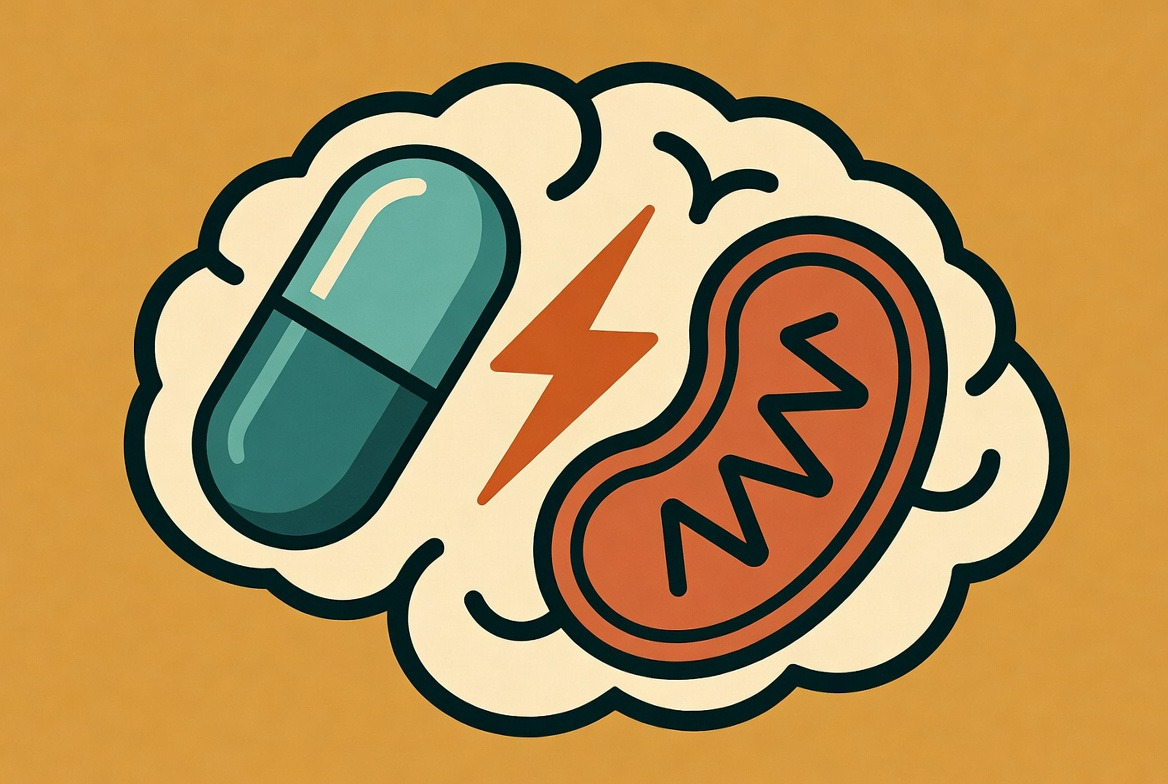
Most people view Viagra as a wildly successful, heavily stigmatized tool for a very specific mechanical issue. We treat it like a punchline. Looking at the latest cellular biology, however, we have had the narrative completely upside down. If you’re already taking sildenafil, you are inadvertently doing your cells a massive favor. If you’re not, you should probably start. A massive new paper just demonstrated that this familiar blue pill does a lot more than manipulate blood flow. It directly intervenes in the root electrical grids of your cells, rescuing dying mitochondria and halting severe neurological decline.
“Off-label treatment on an individual basis with sildenafil in six LS patients improved their motor function and resistance to metabolic crises.”
What’s the Big Idea?
Researchers set out to find a fix for Leigh syndrome, an aggressive, untreatable genetic disease that destroys the mitochondrial engines in the brains and muscles of children. They took skin cells from patients, reverse-engineered them into brain cells, and tested 9,632 existing drugs. They were hunting for anything that could kickstart the cellular batteries back to life. Sildenafil beat every other molecule on the table.
I love seeing medications with incredibly low side-effect profiles suddenly prove themselves in entirely different arenas of human health. We are evolutionary machines designed to reproduce, meaning high-quality sex is a non-negotiable biological priority. I encourage everyone to do what they can to keep a healthy sex life firing on all cylinders. If reaching for sildenafil was purely a bedroom decision for you before, you now have an entirely separate reason to take it, even if everything downstairs works perfectly on its own.
Sildenafil acts as a severe mitochondrial enhancer. These little organelles are the core powerhouses of our cells. If your energy systems degrade, your brain, muscles, and organs simply fail.
The study showed that sildenafil corrected the electrical charge of mitochondrial membranes. It stopped toxic calcium backups in brain tissue. When scientists gave it to mice and pigs engineered with lethal mitochondrial defects, the drug significantly extended their lifespans. They even administered it to six human patients with Leigh syndrome who had run out of options. The daily dosing stabilized their metabolic crashes and fundamentally improved their motor function.
💡 In Plain English
We have long treated Viagra as a biological plumber that simply opens up pipes to increase blood flow, but it actually moonlights as a master electrician for your cells. Instead of just pushing blood around, this highly familiar pill resets the failing electrical grids inside dying cellular batteries to directly rescue energy-starved brain tissue.
Why It Matters and What You Can Do
You might not have a rare genetic syndrome, but your mitochondria dictate how you age, how your brain processes information, and how much chronic fatigue you experience. Your cellular energy grids are constantly under threat, and this study provides a highly accessible defense mechanism.
It runs deeper than blood flow. We originally knew sildenafil dilated blood vessels. Now we know it activates a signaling pathway (cGMP/PRKG1) that essentially tells neurons to stay alive, grow new branches, and manage cell stress.
Direct brain defense. The drug successfully navigated the blood-brain barrier in these cellular models. It targeted neural progenitor cells, actively protecting brain tissue from metabolic starvation.
A fast-tracked anti-aging candidate. Because sildenafil is already FDA-approved and has been taken by millions of men over the last three decades, we don’t have to wait twenty years to understand its long-term safety profile in humans. You can talk to your doctor about it right now.
What’s Next on the Horizon?
The dots are rapidly connecting between poor mitochondrial health and creeping age-related drops in cognition. If throwing a PDE5 inhibitor at a severe genetic energy crisis keeps brain cells alive, the blindingly obvious next targets are Alzheimer’s, Parkinson’s, and Huntington’s diseases.
Scientists still need to untangle exactly how sildenafil twists the dials on the PRKG1 enzyme inside the brain. The drug didn’t perfectly restore every single cellular protein to factory settings in the lab, leaving an open mystery regarding how much of the physical benefit comes from pure vascular blood flow pushing oxygen to the brain versus direct electrical hacking of the mitochondria themselves.
Safety, Ethics, and Caveats
This is a potent cardiovascular drug, not a daily vitamin. The researchers bluntly noted that at highly elevated doses, sildenafil actually proved toxic to lab-grown heart cells. In the genetically modified pig models, those receiving massive doses developed cerebral microhemorrhages.
Sildenafil actively drops blood pressure. It interacts violently with nitrates and other standard heart medications. The human trial in this paper was also incredibly small—just six people—and while they experienced marked benefits, it was an off-label, compassionate-use setup rather than a blinded, randomized placebo trial. The dosing protocols for severe cellular diseases require strict medical oversight. You cannot map this data directly onto a recreational weekend dose.
One last thing
Think about how weird the timeline of modern medicine actually is. A drug designed in the 1980s to treat chest pain accidentally revolutionized treating erectile dysfunction. Thirty years later, that exact same molecule might hold the key to keeping our brain’s energy grids from collapsing. Keep an open mind about the tools we already have.
Explore the full study
Multi-omics, stem cell-based screening uncovers sildenafil as a mitochondrial disease therapy