

Here is the one thing I need to say before we get into the weeds, just so we don’t have any panic attacks: If you have a gym membership, a pair of running shoes, or a heavy kettlebell, do not let this article stop you. If you are already putting in the work, keep doing it. The long game is absolutely still worth playing.
But we need to have a slightly uncomfortable conversation about what happens to our biology when we tackle a hill sprint after our 60th birthday.
There is a pervasive assumption in health culture that exercise is an unmitigated good—a magic bullet that solves everything from depression to heart disease. For the most part, that’s true. But a fascinating new paper out of UC Berkeley suggests that for aging bodies, the story is messy. It turns out that the same run that builds a young heart might actually be scarring an old one.
The good news? We might have found the chemical switch to turn that scarring back into strength.
“In the old mice, the degree of exercised-caused muscle and heart fibrosis was similar to that after CTX injury [injection with cardiotoxin, a snake venom derivative].”
What’s the Big Idea?
Let’s start with the feeling. You know that deep, grinding ache after a workout that was a little too ambitious? In your twenties, that feeling was a badge of honor. It was the signal that you tore muscle fibers so they could grow back thicker and stronger. That is the fundamental contract of fitness: damage leads to repair.
But this new study, published in Journal of Cellular Physiology, suggests that as we age, the contract gets broken.
The researchers took a group of young mice (2-4 months) and old mice (22-24 months) and put them on a treadmill. But they didn’t just make them run; they made them run downhill. This is called eccentric exercise—think about the braking force your quads use when you’re hiking down a mountain. It’s effective, but it creates a lot of mechanical stress.
The young mice handled it fine. Their bodies cleaned up the damage and got stronger. The old mice? Not so much.
Instead of a healthy repair cycle, the old mice spiraled into “inflammaging.” Their immune systems overreacted. Their hearts and leg muscles were flooded with CD45+ inflammatory cells. Worse, the tissue didn’t just heal; it scarred. The study found significant fibrosis—a stiffening of the tissue that makes organs work harder and function worse.
This brings me to a memory that’s been nagging me while reading this data.
Years ago, I went down a rabbit hole on the /r/nootropics subreddit—a place where ambitious biohackers experiment with gray-market compounds to optimize their brains. I remember seeing thread after thread of guys experimenting with oxytocin nasal sprays. They were looking for the “cuddle hormone” benefits—better social bonding, anxiety reduction, maybe a cognitive boost.
I remember thinking it was just another fad. But looking at this study, those internet cowboys might have been stumbling in the right direction, just with the wrong map.
The Berkeley researchers realized that the old mice had a newly synthesized protein profile that was out of whack, specifically in the TGF-beta pathway (a signaling highway that controls cell growth and scarring). To fix it, they didn’t tell the mice to rest. They tried a cocktail.
They combined an Alk5 inhibitor (which blocks that scarring TGF-beta signal) with Oxytocin (which naturally declines as we age).
The results were wild. The combo didn’t just dampen the inflammation; it completely reversed the exercise-induced damage. The old mice on the cocktail could run downhill without their hearts turning into scar tissue. Their protein production started looking “youthful” again.
💡 In Plain English
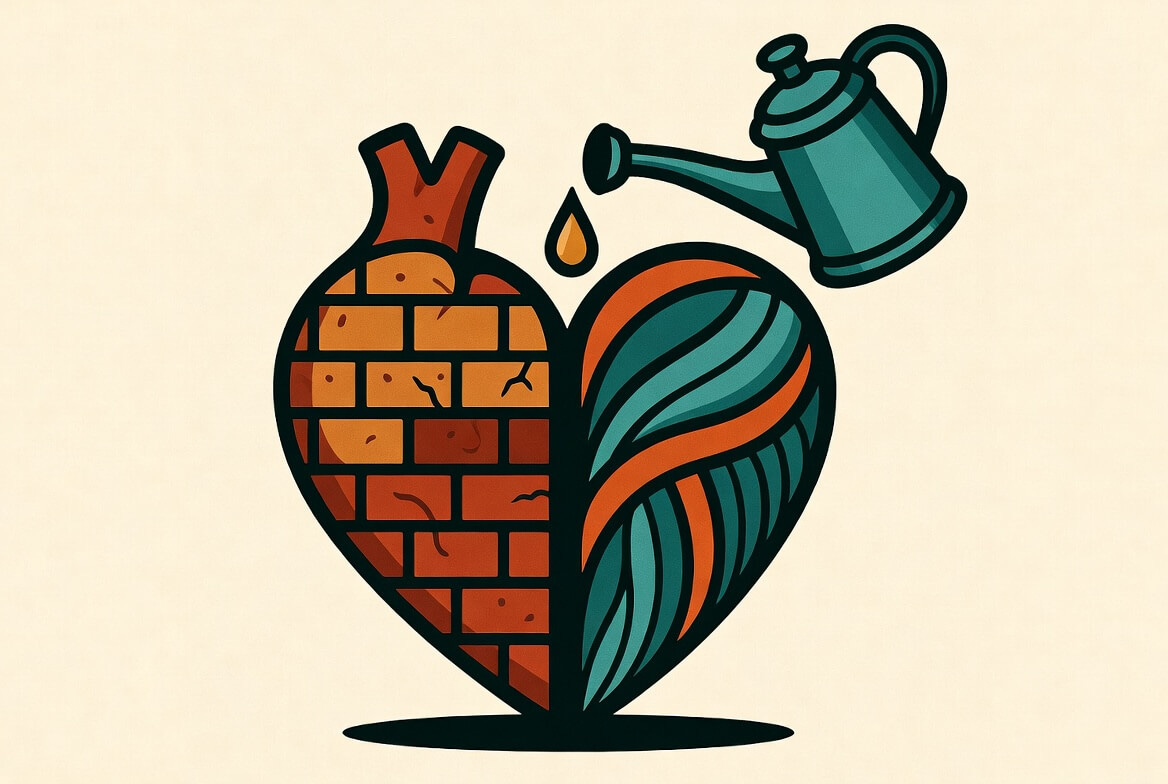
Think of exercise as a demolition crew clearing the way for new growth. While a young body rebuilds the walls with flexible, strong muscle, an aging body panics and patches the holes with rigid concrete (scar tissue), making everything stiffer and less functional. The treatment acts as a new project manager, stopping the panic and ensuring the crew rebuilds the house properly instead of just sealing it shut.
Why It Matters and What You Can Do
So, we aren’t mice. And most of us aren’t injecting experimental TGF-beta inhibitors before our morning jog. But the mechanism matters because it changes how we should frame exercise in the second half of life.
The takeaway isn’t that exercise is bad. It’s that the repair machinery is rustier than the performance machinery. You might still have the lung capacity to run the 10K, but your cellular cleanup crew is understaffed.
If you are getting up there in years (or just feeling like you are), here is how to translate this mouse data into human action:
Rethink the “No Pain, No Gain” Mantra: In older tissue, excessive inflammation isn’t a signal of growth; it’s a warning light. If you are chronically sore or inflamed, you aren’t adapting. You’re just incurring damage.
Modulate the Eccentrics: The study used downhill running specifically because it causes high mechanical stress. If you are older, be careful with heavy “negatives” (the lowering phase of a lift) or high-impact downhill running. These induce the most structural damage. Focus on the concentric (lifting/pushing) phase or low-impact cardio.
Recovery is Not Optional: The young mice cleared the inflammation quickly. The old mice didn’t. You need to give your body significantly more time between hard bouts of inflammation-inducing exercise.
Watch the Stiffness: Fibrosis is basically internal stiffness. If you feel your mobility decreasing despite training, you might be driving inflammation rather than function. Prioritize mobility work that doesn’t tear tissue.
What’s Next on the Horizon
This study opens a door to a new category of medicine: Exercise Mimetics and Enablers.
For a long time, the dream was a “workout pill”—something you take to get abs while sitting on the couch. That’s lazy sci-fi. The real potential, as shown here, is pharmacological support that allows older bodies to reap the rewards of physical work.
The researchers found that using Oxytocin allowed them to use a much lower dose of the Alk5 inhibitor (which is good, because blocking TGF-beta too aggressively can cause other problems). This suggests a future where a “pre-workout” for seniors isn’t caffeine and beta-alanine, but a targeted therapy that primes the immune system to repair muscle rather than scar it.
Basically, we might eventually be able to chemically convince a 70-year-old body that it’s 25 years old for the duration of a workout.
Safety, Ethics, and Caveats
Before you go looking for Alk5 inhibitors on the dark web, pump the brakes.
This study was tight, but it was in mice. Human biology is infinitely more annoying. The TGF-beta pathway—the thing the researchers blocked—is a double-edged sword. Yes, it causes fibrosis (scarring), but it also helps suppress tumors and regulates essential immune functions. If you block it too much or for too long, you might stop your heart from scarring, but you could accidentally invite cancer to the party.
The “Magic Cocktail” worked because they balanced the inhibitor with Oxytocin to keep the dosage low. This is a delicate biochemical balancing act, not something to try at home with research chemicals.
Furthermore, mice were running downhill on forced treadmills. This is an extreme model designed to provoke injury. A brisk walk or a swim is unlikely to turn your heart into leather.
One Last Thing
Aging isn’t just a slow slide into weakness; it’s a change in how we respond to the world. We don’t have to stop moving, we just have to get smarter about the biology of repair. Keep running, but maybe listen to your knees when they tell you the cleanup crew is running late.
Explore the Full Study
In Old Mice, Exercise Induces Inflammation and Fibrosis Unless Alk5‐Inhibitor and Oxytocin Are Used
Journal of Cellular Physiology (2025)
https://doi.org/10.1002/jcp.70054