

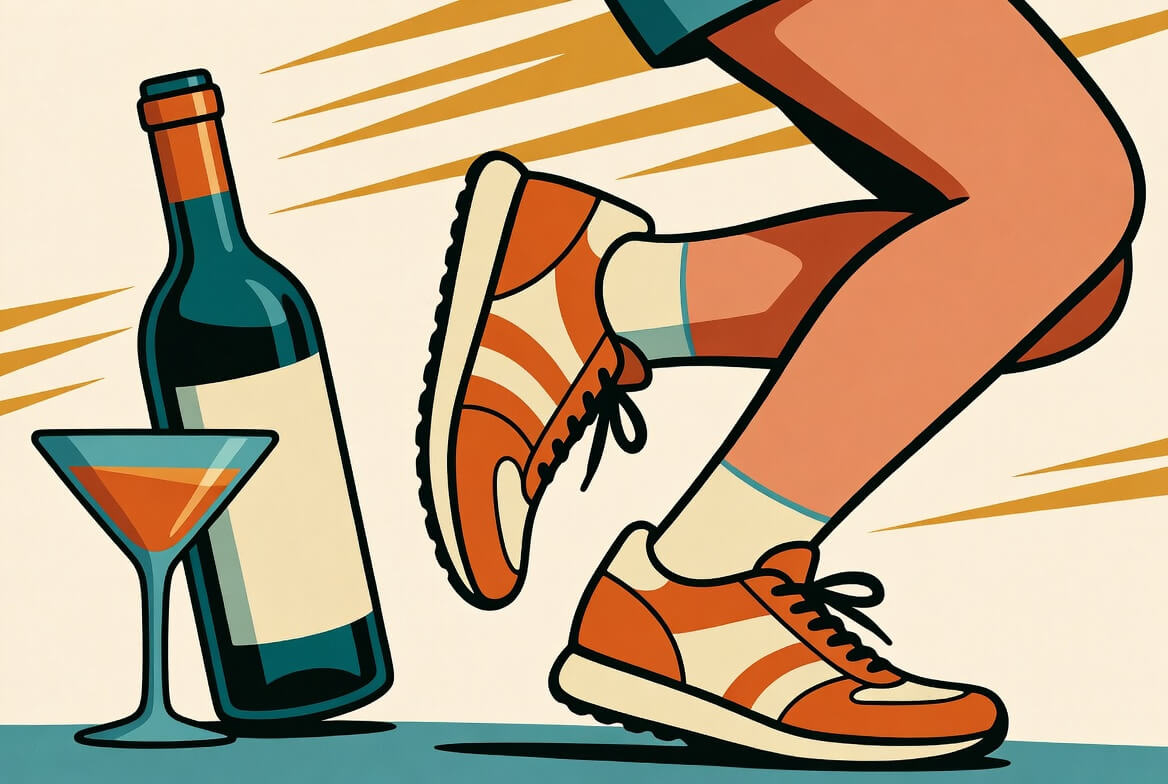
Let’s be honest about the booze. We know it’s fun. I know the appeal of that third (fifth?) drink when the conversation is flowing and the edges of the day start to blur. I used to love getting drunk, and I’m not here to preach from a high horse. But I’ve been a year sober now, and the difference isn’t subtle. My sleep has transformed from a coma to actual rest, my strength numbers are up, and let’s just be direct: things are working significantly better in the bedroom.
The trade-off just isn’t worth it anymore.
But I also know that if you’re serious about living a long, healthy life, the idea of quitting entirely feels like a social death sentence. It’s an adjustment. You worry about being the buzzkill, or what to do with your hands at parties. Here is the reality: you adapt, your friends adapt, and eventually, you just feel superior on Sunday mornings.
However, if you aren’t ready to put the bottle down today, a fascinating new study out of Norway suggests you better surrender to the treadmill instead. We’ve always treated alcohol and exercise as separate columns in the health ledger. A new analysis of nearly 25,000 adults suggests that might be the wrong way to look at it.
“A 10-year change in fitness is a better predictor of mortality than contemporary changes in alcohol intake.”
The “Run for Your Life” Defense
Researchers from the Norwegian University of Science and Technology dug into the HUNT study—a massive dataset tracking the health habits of Norwegians over decades. They looked at people in the mid-90s and then checked back in on them ten years later, tracking who died, who drank, and who stayed fit.
The headline finding is exactly what you’d expect: drinking more alcohol increases your risk of dying early. No surprise there.
But the nuance is where things get interesting. The data showed that your cardiorespiratory fitness (think VO2 max, or how well your heart and lungs handle stress) acts as a massive buffer against the harms of alcohol.
If you are “unfit” (in the bottom 20% of your age group) and you drink? You are playing with fire. Your mortality risk skyrockets.
But if you possess even a moderate level of fitness (essentially, anyone not in that bottom 20%), the link between moderate alcohol consumption and early death gets weaker. In some specific data cuts, the fit drinkers actually outlived the unfit abstainers.
This implies a stark hierarchy of survival:
Fit and Sober: The gold standard.
Fit and Drinker: Risky, but managed.
Unfit and Sober: worse than you’d think.
Unfit and Drinker: The danger zone.
The researchers found that a change in fitness levels predicted survival better than a change in drinking habits. If you quit drinking but sat on the couch for a decade, your odds weren’t great. If you kept drinking but got significantly fitter, your odds improved.
💡 In Plain English
Think of your metabolism like a car engine and alcohol like low-grade, dirty fuel. If you put that fuel in a neglected clunker, the sludge piles up and destroys the motor. But if you pour that same fuel into a high-performance race car, the system is robust enough to burn through the impurities and keep running without breaking down.
Why It Matters and What You Can Do
This doesn’t mean alcohol is “safe” if you run a 5K on Saturdays. It means that metabolic health provides a shield against toxins. Alcohol causes oxidative stress and inflammation; exercise builds the body’s antioxidant defenses and improves vascular function. You are essentially building a stronger engine to process the bad fuel you’re pouring in.
If you are navigating the social friction of lifestyle changes, here is your playbook based on the data:
Get Out of the Bottom 20%: This is the non-negotiable step. You don’t need to be an Olympian. The study utilized a specific cutoff where the top 80% saw benefits. This means simply walking, hiking, or light jogging puts you ahead of the curve.
Prioritize the Sweat: If you know you have a boozy weekend coming up (wedding, reunion, holidays), do not skip the gym. The protective effect of fitness is your safety net. Earn your drinks.
Don’t Rely on the “Runner’s Defense” Forever: While fitness attenuates the risk, the study showed that people who went from “within recommendations” to “heavy drinking” still saw their risk climb, even if they were fit. You can’t outrun liver failure.
Embrace the Adjustment: As I mentioned earlier, quitting or cutting back is an adjustment in social situations. But the physiological bounce-back—better erections, better sleep, better mood—compounds with the fitness gains.
What’s Next on the Horizon
We are moving toward a more holistic view of “risk.” For years, medicine has tried to isolate variables—salt, fat, booze, steps. This study pushes us toward a “Cluster Theory” of health. It suggests that high-functioning systems (fit bodies) are resilient to stressors in a way that fragile systems (unfit bodies) are not.
Future research will likely focus on the specific dose of exercise needed to offset specific amounts of alcohol. We might eventually see guidelines that say, “For every glass of wine, you owe the vascular system 10 minutes of Zone 2 cardio.” Until then, the trend is clear: resilience is the currency of longevity.
Safety, Ethics, and Caveats
Let’s check the fine print before you head to the pub with your Strava stats as a shield. This study relies on self-reported data. People are notorious liars about how much they drink. The heavy drinkers in this study might have been drinking even more than they admitted, skewing the data.
Furthermore, “not dying” is a low bar for health. The study looked at all-cause mortality. It did not look at anxiety, depression, gray skin, beer bellies, or the general feeling of garbage that accompanies a hangover in your 40s. Alcohol is a neurotoxin. Just because your heart keeps beating doesn’t mean your brain is enjoying the ride.
Also, there is a “Sick Quitter” phenomenon in epidemiology. Sometimes, people who abstain from alcohol do so because they are already sick or on medication, which makes the “sober” group look like they die faster. The researchers tried to adjust for this by excluding people with previous heart conditions, but it’s a known statistical ghost in the machine.
One Last Thing
You have two levers to pull for a longer life: what you put in your mouth and how you move your body. If you can’t bring yourself to pull the first lever yet, you damn well better pull the second one as hard as you can.
Explore the Full Study
Running from Death: Can Fitness Outpace Alcohol’s Harm? Changes in Alcohol Intake, Fitness and All‑Cause Mortality in the HUNT Study, Norway
Read the full paper here