

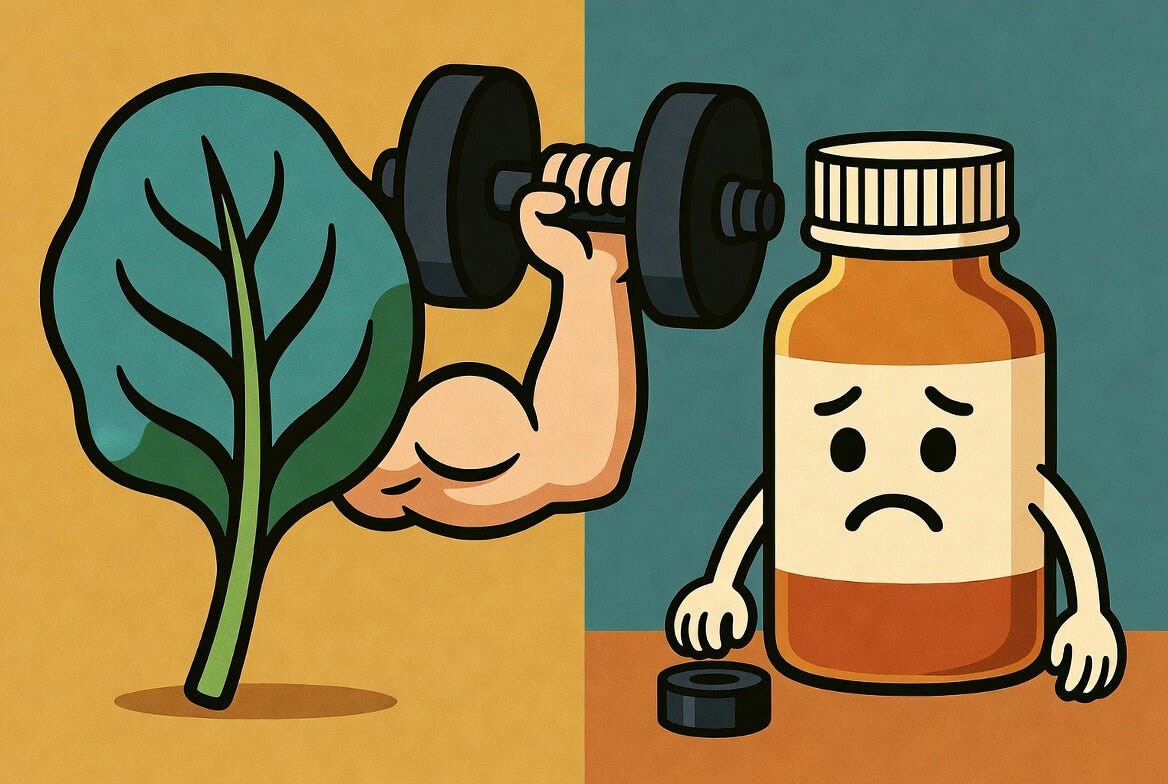
Let’s get one thing straight immediately: I’ve been keeping a secret in my supplement stack.
While everyone else is obsessing over the latest pre-workout stims or arguing about creatine timing, I’ve been relying on something effectively invisible to the mainstream fitness conversation. It’s called Beta-Ecdysterone. I’ve reached for this stuff as needed for years, though I often forget that most people have never heard of it.
Here is the bottom line: Beta-Ecdysterone is hands-down one of the best endurance enhancers I have ever tried.
That’s a bold claim, especially for a plant extract that sounds like unwanted sci-fi jargon. But for me, it is second to none. I generally dose it on days where the volume is going to be high—Crossfit classes, heavy hiking, or long-distance cycling. It’s the difference between hitting a wall and smashing through it.
But don’t just take my anecdotal word for it. A study out of the Biology of Sport took a hard look at this compound, and the results were enough to make the authors panic and call the World Anti-Doping Agency (WADA).
“The anabolic potency of ecdysterone was comparable or even higher as found for the anabolic androgenic steroids [Dianabol], SARMs or IGF-1.”
— Parr et al.
What’s the Big Idea?
The scoreboard on this study is shocking. Researchers took male Wistar rats and divided them into groups to see what would make their soleus muscles grow the most over 21 days. They didn’t just test ecdysterone against a placebo; they put it in the ring against heavy hitters: Metandienone (better known as the legendary steroid Dianabol), Estradienedione (Trenbolox), and a SARM (Selective Androgen Receptor Modulator) called S-1.
You would expect the pharmaceutical-grade steroids to wipe the floor with a plant extract.
They didn’t. The rats injected with ecdysterone showed a massive increase in muscle fiber size. In fact, at the same dosage (5mg per kg of body weight), ecdysterone induced more hypertrophy than both the SARM and the steroids.
The mechanism here is the really interesting part. Most muscle-building drugs work by hammering the Androgen Receptor (AR)—the port that welcomes testosterone. That’s what causes the growth, but also the nasty side effects like balding, shutdowns, and rage.
Ecdysterone ignores the Androgen Receptor entirely.
Instead, the study found it binds to Estrogen Receptor Beta (ERβ). This is a “side door” to growth. By triggering the ERβ signaling pathway, ecdysterone stimulates protein synthesis (making new muscle) and activates the PI3K/Akt pathway (the cellular “grow” switch) without the hormonal baggage of traditional anabolics.
💡 In Plain English
Think of traditional steroids like a battering ram that smashes the front door to force muscle growth, often damaging the house in the process. Beta-Ecdysterone uses a forgotten side entrance (the estrogen receptor) to trigger that same internal construction crew without wrecking the doorframe. You get the renovation without the demolition.
Why It Matters and What You Can Do
If you move your body for a living—or just for sanity—you should care about this. While the study focused on muscle size (hypertrophy), my experience aligns with the performance aspect of that stability. Bigger, stronger muscle fibers don’t just look good; they resist fatigue.
When I’m staring down a long cardio session or a complex lift, this is the tool I want in my kit. The data suggests that we aren’t just looking at a slight boost; we are looking at pharmaceutical-grade potency derived from nature.
Here is how to approach this:
Check the Label Standard: You want Beta-Ecdysterone (20-Hydroxyecdysone). Many supplements are underdosed or use raw spinach powder, which you would need to eat by the truckload to get an effective dose. Look for standardized extracts (usually 90-95%).
Timing is Key: I use it specifically for high-output days. If you are planning a long ride or a heavy metabolic conditioning session, pop it about 30-60 minutes prior.
Stack with Protein: The mechanism relies on increasing protein synthesis. The compound turns on the construction crew, but you still need to provide the bricks. Ensure your protein intake is high on the days you supplement.
What’s Next on the Horizon
The researchers in this study were so freaked out by the effectiveness of ecdysterone that they explicitly recommended WADA ban it. They stated, “The high anabolic potency... justifies its classification as an anabolic agent and therefore needs to be listed in the category S1.”
That is the ultimate endorsement.
If the anti-doping scientists are worried it works too well, that’s a signal for the rest of us. Currently, it sits in a grey area—monitored, but usually legal for sale. We are likely going to see more “natural anabolic” blends pivoting to high-quality ecdysterone extracts as the science trickles down. We might also see pharmaceutical development looking at ERβ agonists as a way to treat muscle wasting without the risks of testosterone therapy.
Safety, Ethics, and Caveats
There is no free lunch in biology. While ecdysterone doesn’t bind to androgen receptors (saving you from the classic steroid side effects), manipulating Estrogen Receptor Beta isn’t arguably “neutral.”
The study used injections, whereas your supplement is oral. Bioavailability is always the bottleneck with plant sterols. You won’t get the exact results the rats did because your liver will break a lot of it down before it hits your muscles.
Furthermore, we need to respect the “unintended consequences” rule. ERβ plays roles in the immune system and central nervous system. While the toxicity reports in mammals are generally clean (even at high doses), we are playing with potent signaling pathways. Treat it with the respect you’d give any powerful active compound.
One Last Thing
Next time you’re prepping for a grueling hike or a competition, skip the extra caffeine. Try the spinach extract instead. Just don’t tell WADA I sent you.
Explore the Full Study
Ecdysteroids: A novel class of anabolic agents?
Parr et al., Biology of Sport, 2015